
Supporting and navigating your child’s journey with learning difficulties can be an intimidating process, especially in the early stages of investigating the situation.
Queensland schools support students with learning disorders by providing access to a range of supports tailored to meet individual needs.
Seeking the support of your child’s school teachers is an important step to understanding how they are progressing, what support they are receiving and working together towards a plan for your child’s development.
Once you arrange a parent-teacher interview, it is important to be prepared and know how to approach the conversations to ensure you get the most out of your meeting.
Code Read Dyslexia Network shared “7 Tips for meeting with your child’s school” written by Sarah Mitchell, Dyslexia and Literacy Consultant, that can help you enter the parent-teacher meeting confidently, with topics including:
Prepare
Keep all reports, emails, and notes in one folder for easy reference. Research effective teaching strategies and prepare key questions. Focus on solutions, practice responses, and stay constructive to ensure the best support for your child.
What to Ask?
Ask if your child has an Individual Education Plan (IEP) and request assessment reports. Inquire about interventions, their effectiveness, and whether they are evidence-based. Clarify what accommodations are provided and ensure the IEP includes targeted support, not just adjustments.
Put everything in writing
Take notes during the meeting and email them to attendees for confirmation. Record key points, action items, and deadlines. Request a follow-up review date and details on how progress will be measured.
Use time wisely
Prioritise key concerns, focus on solutions, and ask necessary questions. Stay future-focused and arrange follow-ups if needed.
Follow up
Check in after two weeks and maintain monthly communication. Collaborate with teachers rather than relying on your child for updates.
Leave silent space
Ask direct questions and allow time for responses. Silence can encourage deeper discussion and problem-solving.
Educate respectfully
Share concise resources with teachers and inquire about learning difficulty training. Support their knowledge without being confrontational.
For more information and resources contact our team or check out our library. Take the first steps towards your child’s future!
Click Here to Download the Guide
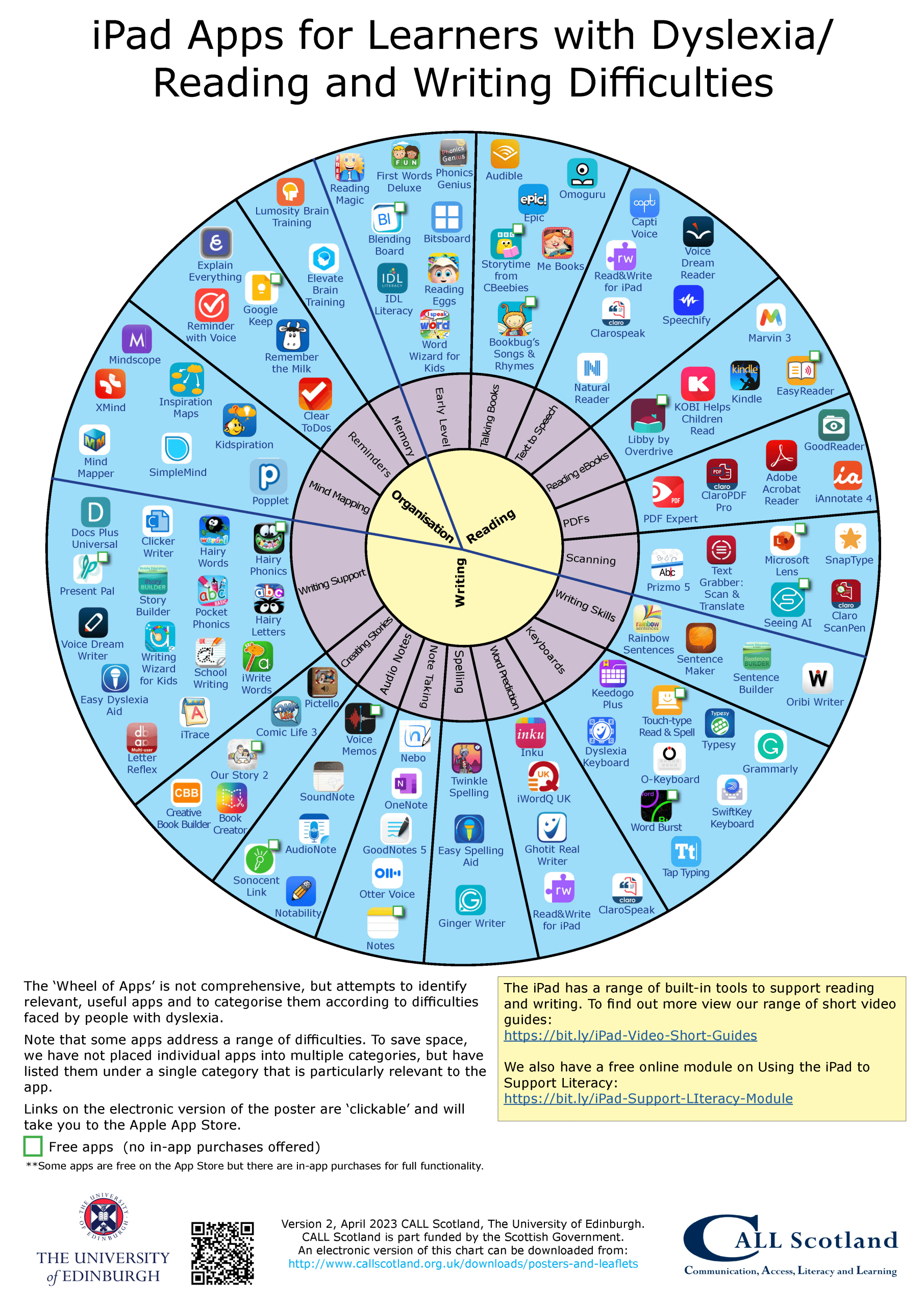
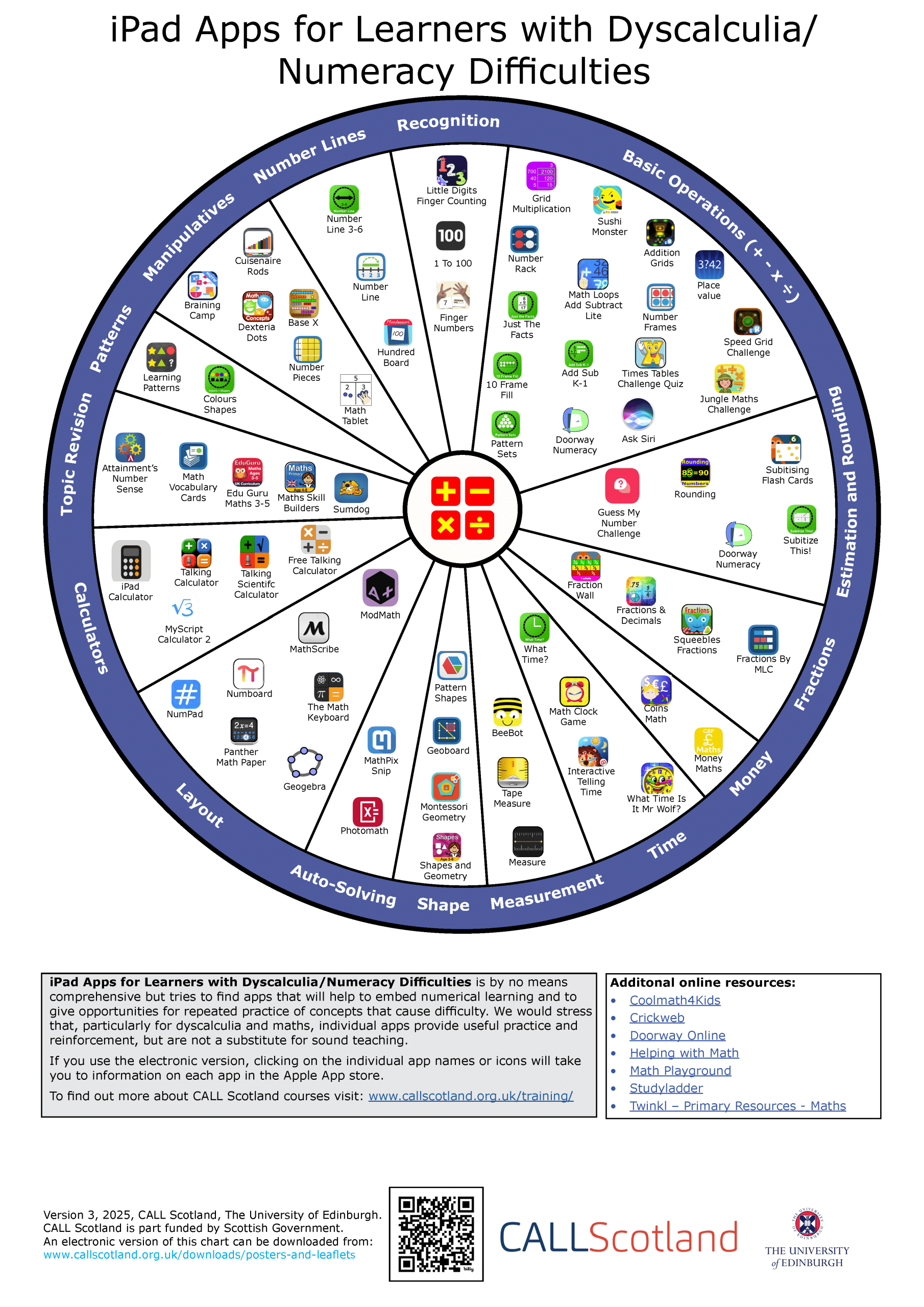
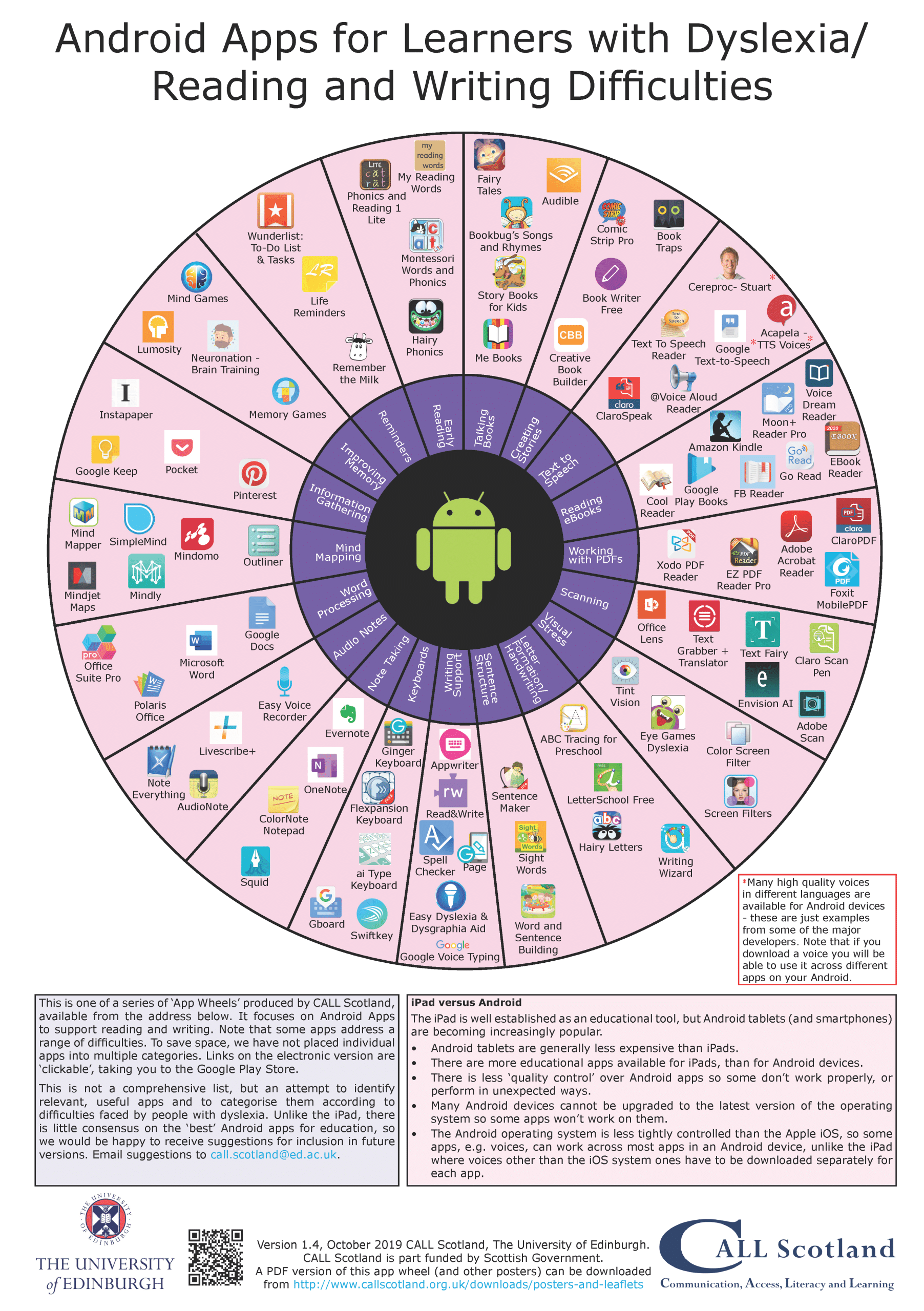
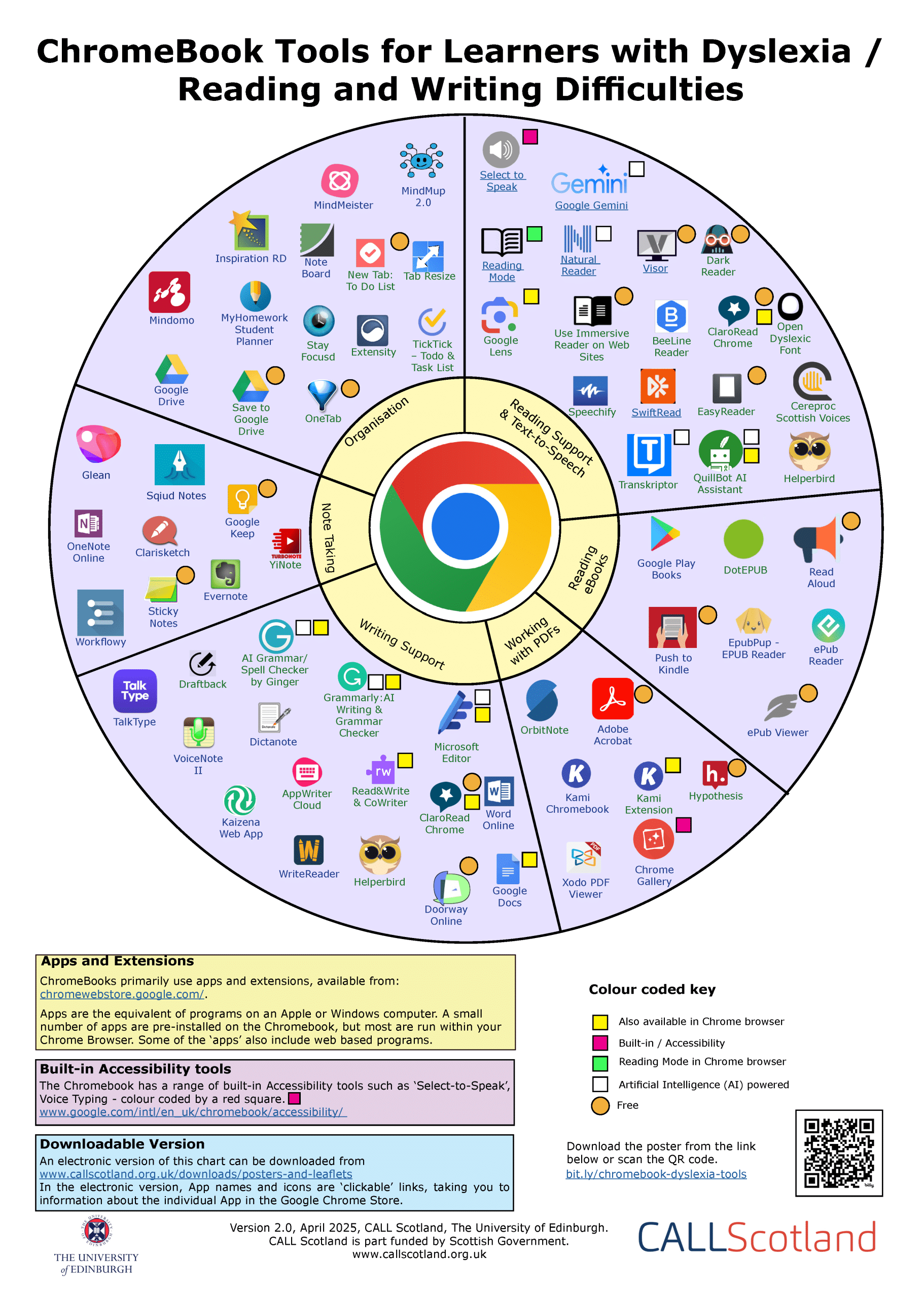
CALL Scotland (Communication, Access, Literacy and Learning) help children and young people to overcome disability and barriers to learning created by their environment, and to fulfil their potential. They offer free resources for all to download, including their popular 'Wheel of Apps' posters which provide useful apps across multiple devices for those who have a learning difficulty: https://www.callscotland.org.uk/downloads/posters-and-leaflets/
iPad Apps for Learners with Dyslexia: https://www.callscotland.org.uk/downloads/posters-and-leaflets/ipad-apps-for-learners-with-dyslexia/
iPad Apps for Learners with Dyscalculia/Numeracy Difficulties: https://www.callscotland.org.uk/downloads/posters-and-leaflets/ipad-apps-for-learners-with-dyscalculianumeracy-difficulties/
Android Apps for Learners with Dyslexia: https://www.callscotland.org.uk/downloads/posters-and-leaflets/android-apps-for-learners-with-dyslexia/
ChromeBook Tools for Learners with Dyslexia / Reading and Writing Difficulties: https://www.callscotland.org.uk/downloads/posters-and-leaflets/chromebook-apps-and-extensions-for-learners-with-dyslexia/
(adapted from Emma Derbyshire’s blog: https://www.bera.ac.uk/blog/dyslexia-and-artificial-intelligence)
Most readers are likely familiar with ChatGPT by now. For some, this term evokes hope and excitement, while others may feel apprehensive.
Before discussing ChatGPT's potential applications for dyslexia, let's first define and clarify what ‘artificial intelligence’ (AI) means. According to Britannica (2023), AI is defined as ‘the ability of a digital computer or computer-controlled robot to perform tasks typically associated with intelligent beings.’ However, individuals with dyslexia often find tasks like searching for and extracting information from texts more challenging than neurotypical individuals.
AI has now entered what is referred to as the ‘stage of intelligent cognition’ (Wang et al., 2023), meaning it has the ability to replicate human-like cognitive processes. While this may seem daunting, we can also view it from a different perspective. Consider a classroom of 30 students, each with multiple questions about a topic. Can that one teacher effectively address all those inquiries? This is where AI systems like ChatGPT could be beneficial, allowing students to ask questions and receive responses that deepen their comprehension.
AI could serve as a valuable assistive tool for individuals with dyslexia. Assistive technology, now including AI, can improve the learning experience and create a more supportive environment for those facing dyslexia (Pontikas et al., 2022). When applied correctly, such technology has the potential to offer an added layer of reinforcement, positively impacting learning outcomes (Barua et al., 2022).
Gavin Reid (2009) characterizes dyslexia as: ‘a processing difference, typically evident in challenges with literacy acquisition affecting reading, writing, and spelling. It can also influence cognitive functions such as memory, processing speed, time management, coordination, and automaticity. Individuals may experience visual and/or phonological difficulties, alongside variations in educational achievement. Recognizing these individual differences and learning styles is crucial when planning interventions and accommodations.’
Interestingly, this definition highlights the importance of learning styles, interventions, and accommodations. In our rapidly advancing technological era, AI could act as a vital tool for accommodation and intervention to bolster learning.
‘Providing access to AI for individuals with dyslexia could offer broader benefits, such as enhanced mental well-being, lower anxiety levels, and improved academic engagement.’ Studies from the University of California involving children and adolescents (ages 7–14) with dyslexia indicate that this condition is associated with heightened anxiety, which can negatively affect academic performance (Hossain et al., 2021). Therefore, offering AI tools to those with dyslexia could logically result in improved mental health, reduced anxiety, and greater engagement with education. Although further research is necessary to confirm these outcomes, their plausibility remains strong.
Here are additional considerations:
Viewpoint 1: The Promise of AI for Individuals with Dyslexia
• Serves as a foundational resource for cross-checking and expanding upon information.
• Acts as a basis for revision that fosters deeper understanding.
• Allows for personalized responses to specific inquiries.
• Offers an individualized learning approach, especially beneficial for those who struggle with reading information.
• Simplifies complex concepts, making explanations more accessible for areas where confusion exists, or information is not yet fully grasped.
Viewpoint 2: The Risks of AI for Individuals with Dyslexia
• Users should avoid directly copying AI-generated text and presenting it as their own work.
• AI should not be treated as the sole source for information.
• AI text generation cannot replace established educational strategies that underpin reading and writing.
Guidance is now needed on how to effectively integrate AI within educational environments. Recently, the Joint Council for Qualifications issued guidelines regarding AI use in assessments (JCQ, 2023). They emphasize that, similar to traditional literature, sources generated by AI must be appropriately cited to prevent plagiarism, using examples like: ChatGPT 3.5 (https://openai.com/blog/chatgpt/), date.
While there is currently a lack of comprehensive studies and publications on the intersection of AI and dyslexia, this area is expected to evolve. In the interim, AI may be regarded as another form of assistive technology, providing a supplementary foundation for learning and comprehension. When used and cited correctly, AI could greatly benefit individuals with dyslexia and be advantageous for other students as well.
References
Barua, P. D., Vicnesh, J., Gururajan, R., Oh, S. L., Palmer, E., Azizan, M. M., Kadri, N. A., & Acharya, U. R. (2022). Artificial intelligence enabled personalised assistive tools to enhance education of children with neurodevelopmental disorders: A review. International Journal of Environmental Research and Public Health, 19(3), 1192.
Britannica. (2023). Artificial intelligence. Retrieved June 6, 2023, from https://www.britannica.com/technology/artificial-intelligence
Hossain, B., Bent, S., & Hendren, R. (2021). The association between anxiety and academic performance in children with reading disorder: A longitudinal cohort study. Dyslexia, 27(3), 342–354.
Joint Council for Qualifications [JCQ]. (2023). AI use in assessments: Protecting the integrity of qualifications. Retrieved September 7, 2023, from https://www.jcq.org.uk/exams-office/malpractice/artificial-intelligence
Pontikas, C. M., Tsoukalas, E., & Serdari, A. (2022). A map of assistive technology educative instruments in neurodevelopmental disorders. Disability and Rehabilitation: Assistive Technology, 17(7), 738–746.
Reid, G. (2009). Dyslexia: A practitioner’s handbook (4th ed.). Wiley Blackwell.
Wang, X., He, X., Wei, J., Liu, J., Li, Y., & Liu, X. (2023). Application of artificial intelligence to the public health education. Frontiers in Public Health, 10, 1087174.

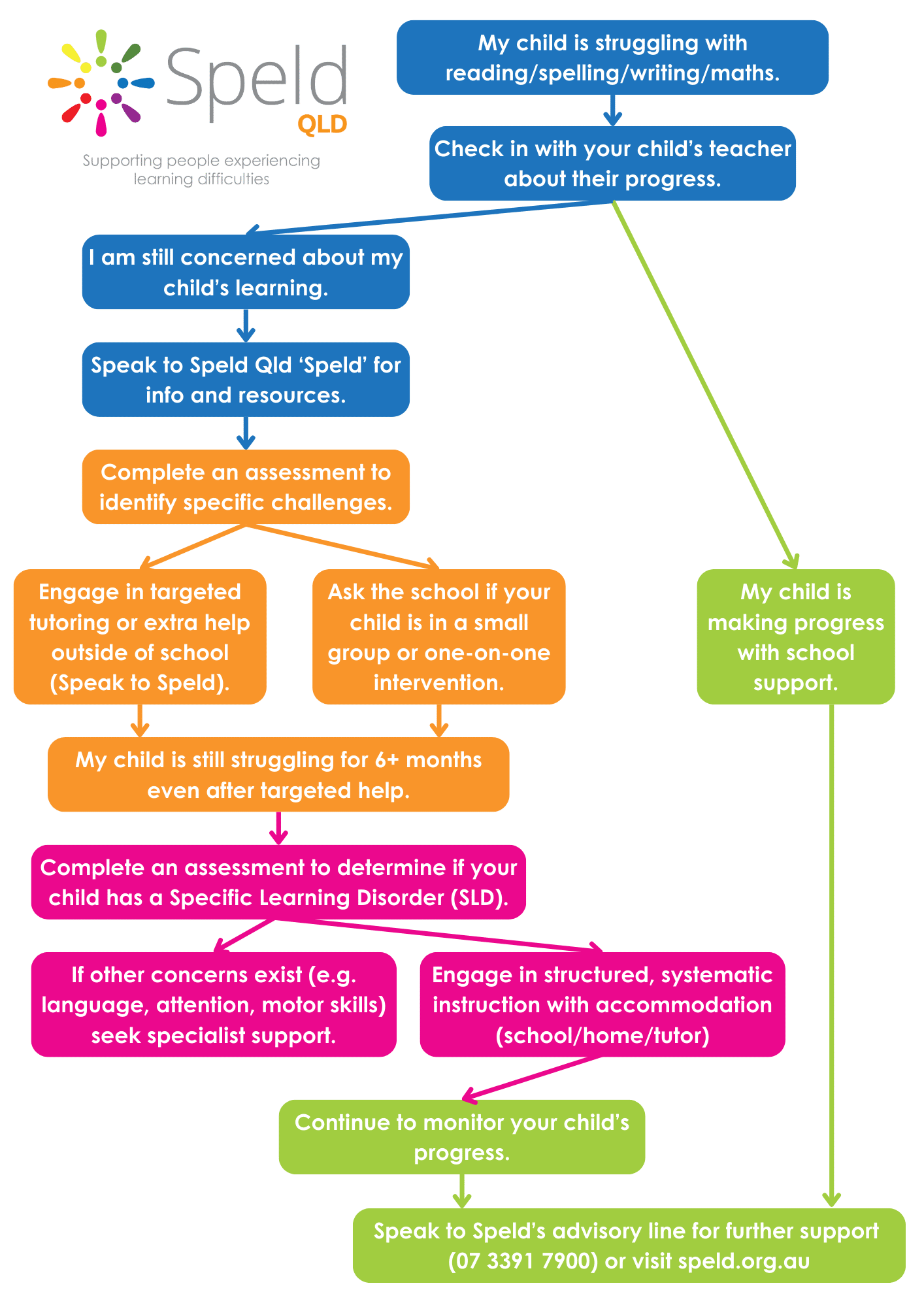
Consider a learning assessment to identify specific areas of strength and difficulty and the most appropriate interventions. The assessment report will also recommend other professionals who may be able to support your child (e.g., tutor, speech pathologist, occupational therapist, paediatrician).
If your child’s academic difficulties persist for at least six months despite targeted intervention (at school or with a tutor):
Remember - early intervention is key to addressing learning challenges, building confidence, and ensuring your child has all the tools and support needed to learn.
Speld Qld Advisory Line
https://speld.org.au/advisory-line/
Ph: (07) 3391 7900
7 Tips for Meeting with Your Child’s School
11 Questions for dyslexia friendly schools
NCCD
https://www.nccd.edu.au/for-parents-guardians-and-carers
Decision-making Flowchart for Learning Assessments
Assistive Technology (AT) is the hardware and software used by a student with learning difficulties which enables them to achieve their potential and beyond. Assistive Technology (AT) benefits individuals with learning difficulties such as dyslexia, dysgraphia, dyspraxia, memory difficulties, language disorders and auditory processing disorder. AT lightens the load for students with learning difficulties and those who support them.
Assistive Technology (AT) in the classroom can be extremely helpful for students with specific learning disorders and enable equity of access to the curriculum for all students.
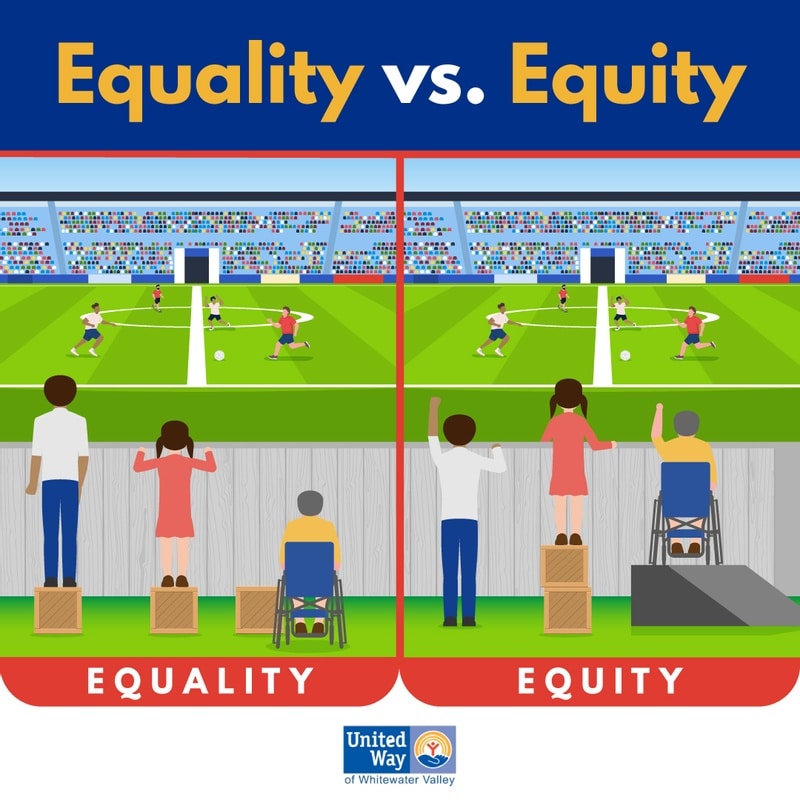
Here are some great resources for understanding how AT can be integrated into standard classroom practice and the benefits for all students, but particularly students with specific learning disorders.
https://www.understood.org/en/search-results?query=assistive%20technology
https://education.qld.gov.au/students/inclusive-education/assistive-technology
https://www.ldrfa.org/exploring-benefits-assistive-technology/
Speld Qld is committed to ensuring that Queenslanders who experience learning difficulties have access to information and training in relation to assistive technology. Knowing how to maximise assistive features of a device and how to utilise assistive tools often lightens the load and improves outcomes for those who experience learning difficulties. Speld Qld has offered iPad consultations for several years now and we are now pleased to announce that we are now able to offer similar consultation sessions for PCs and laptop users.
One hour face-to-face AT Consults are available for $160.00 (from the 1st of February). This service is available to Financial Speld Qld Members only.